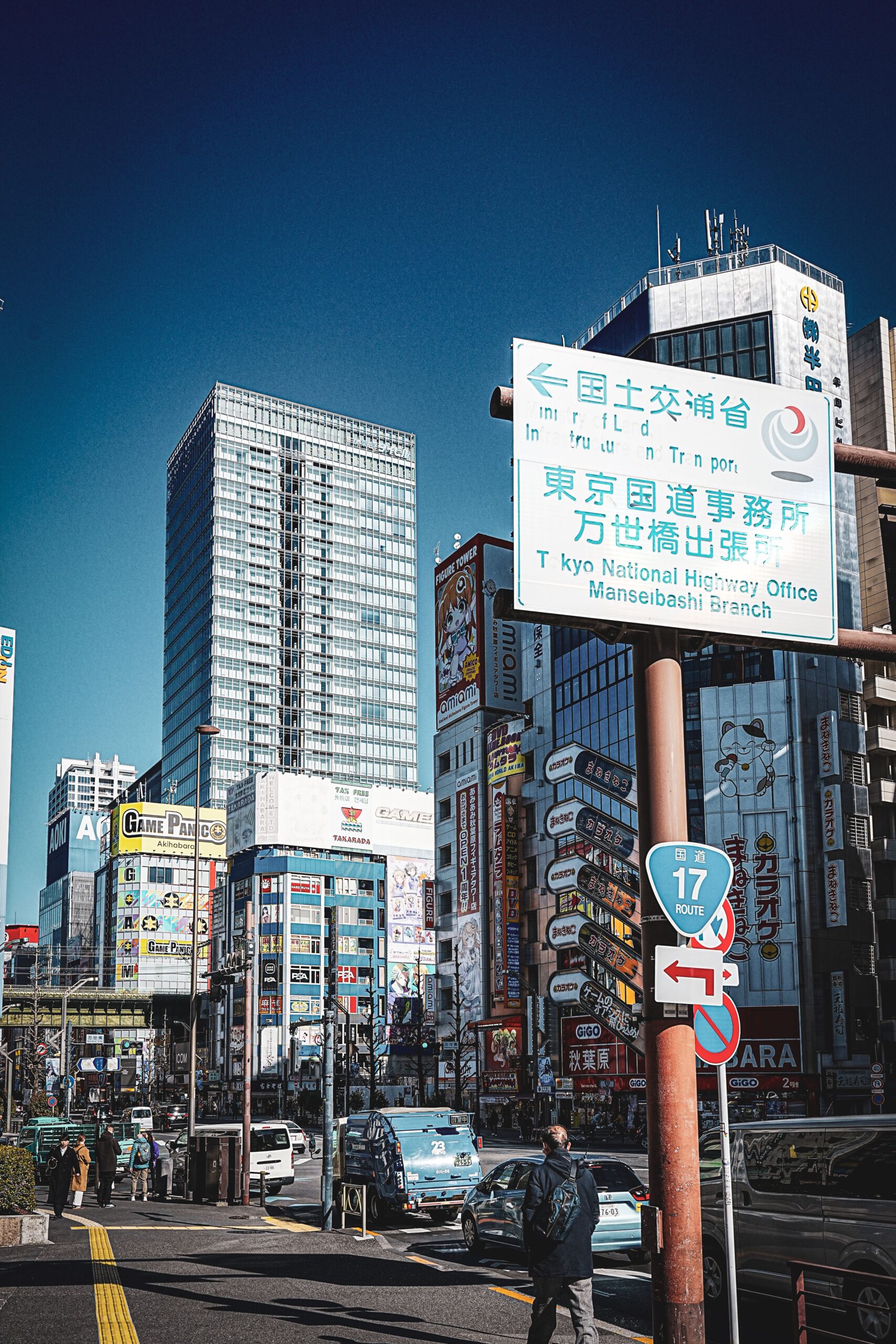
GPS works great in Japan — right up until you're standing at a train station with six exits and none of them match what your map says.
Japan's addresses don't work the way most visitors expect, and even locals occasionally stop and ask someone nearby for directions. Knowing how to ask — and how to understand the answer you get back — turns a stressful moment into a quick, normal interaction.
🗺️ Asking the Question
| English | Japanese | Romaji |
|---|---|---|
| Where is ~? | ~はどこですか? | ~ wa doko desu ka? |
| How do I get to ~? | ~へはどう行けばいいですか? | ~ e wa dō ikeba ii desu ka? |
| Is this the right way to ~? | これは~への道で合っていますか? | Kore wa ~ e no michi de atte imasu ka? |
| Could you show me on the map? | 地図で教えてもらえますか? | Chizu de oshiete moraemasu ka? |
That last one is worth leading with. Pulling out your phone with a map or address already open and asking someone to simply point is often faster and clearer than trying to follow a verbal explanation in a language you're still learning.
👂 Understanding the Answer
| English | Japanese | Romaji |
|---|---|---|
| Straight ahead | まっすぐ | Massugu |
| Right | 右 | Migi |
| Left | 左 | Hidari |
| Near / next to ~ | ~の近く / ~の隣 | ~ no chikaku / ~ no tonari |
| At the end of the street | 突き当たり | Tsukiatari |
| In front of ~ | ~の前 | ~ no mae |
If the explanation moves faster than you can follow, it's completely fine to ask for it again slowly — see our beginner survival phrases guide for "could you say that more slowly," which works just as well here as anywhere else.
🏢 Why Japanese Addresses Are Genuinely Different
This isn't just a language barrier — the address system itself works differently. Rather than being organized by street name and building number (the system most visitors are used to), Japanese addresses are organized by district, block, and building number — streets themselves often don't have commonly-used names at all. This is why even taxi drivers and delivery staff sometimes rely on a nearby landmark or a phone map rather than the written address alone.
Practical takeaway: for anything beyond "the station is that way," showing an address or pin on a map app will almost always get you better help than trying to say or spell out an address verbally.
⚠️ 7 Mistakes to Avoid
- Assuming street names will help you navigate — many streets aren't commonly referred to by name; addresses work by district/block/building instead.
- Trying to verbalize a full address — showing it on a map app is far more reliable.
- Not asking again when you lose track of directions — "mō ichido onegaishimasu" (one more time, please) is completely normal.
- Overlooking station staff — station attendants are usually a faster, more reliable source of directions than a random passerby, especially inside large stations.
- Assuming every exit from a station leads somewhere similar — large stations can have exits that are a genuine 10+ minute walk apart from each other.
- Not screenshotting your destination in advance — handy for low-signal areas or when you can't easily type.
- Hesitating to ask a stranger — it's a completely normal, low-friction interaction; most people are glad to help.
📋 Your Cheat-Sheet Recap
| # | English | Japanese | Romaji |
|---|---|---|---|
| 1 | Where is ~? | ~はどこですか? | ~ wa doko desu ka? |
| 2 | Could you show me on the map? | 地図で教えてもらえますか? | Chizu de oshiete moraemasu ka? |
| 3 | Straight ahead | まっすぐ | Massugu |
| 4 | Right / Left | 右 / 左 | Migi / Hidari |
| 5 | Near / next to ~ | ~の近く / ~の隣 | ~ no chikaku / ~ no tonari |
| 6 | At the end of the street | 突き当たり | Tsukiatari |
Combine this with a map app and a willingness to ask twice, and getting un-lost in Japan is rarely more than a two-minute detour.