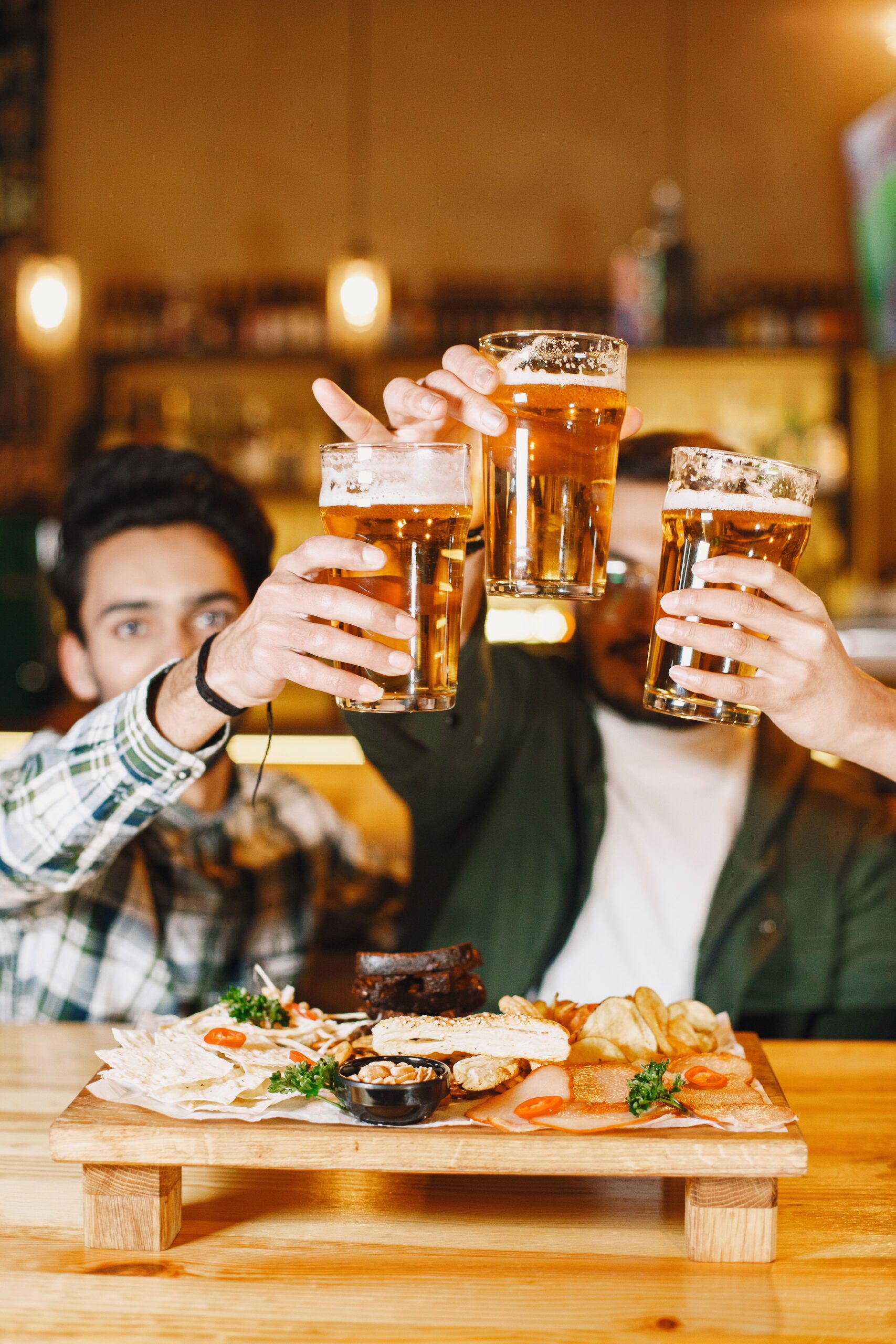
A nomikai looks like a casual night out. It's also quietly running on office hierarchy the entire time.
A nomikai (飲み会) — a work drinking party — is where a lot of real workplace bonding happens in Japan, and it runs on a specific, mostly unspoken etiquette that blends our izakaya guide with the hierarchy covered in our honorifics guide. Knowing the shape of it in advance makes the difference between feeling lost and actually enjoying it.
🪑 Seating Order Matters
The seat furthest from the entrance — the kamiza (上座), or "upper seat" — is reserved for the most senior person present. The seat closest to the door — the shimoza (下座), or "lower seat" — goes to the most junior. If you're new or junior and someone gestures you toward a specific seat, it's not random; take the hint rather than picking your own spot.
| Term | Japanese | Meaning |
|---|---|---|
| Kamiza | 上座 | Seat of honor, farthest from the door — for the most senior person |
| Shimoza | 下座 | Seat nearest the door — for the most junior person |
🍺 "Let's Start With Beer"
It's extremely common for the whole table to order the same first drink — almost always beer — even if people plan to switch afterward. This is called toriaezu biiru (とりあえずビール), roughly "beer for now," and it's less about preference than about getting everyone's glass ready for the opening toast at the same time.
🍶 Never Pour Your Own Glass
This is the single most important nomikai rule: you pour for others, and others pour for you — you don't fill your own glass. Keep an eye on the glasses near you, especially more senior colleagues', and offer to top them off. When someone pours for you, hold your glass up with both hands as a small sign of thanks.
| English | Japanese | Romaji |
|---|---|---|
| Let me pour you one | お注ぎします | O-tsugi shimasu |
| Thank you (while receiving a pour) | ありがとうございます | Arigatō gozaimasu |
| Cheers! | 乾杯! | Kanpai! |
🔁 Nijikai: The After-Party
Many nomikai don't end after one venue — a nijikai (二次会), or "second party," often follows at a different bar or karaoke spot. Attendance is more optional than the first round, but showing up briefly, even for a short time, is generally seen as good form rather than something you're expected to skip entirely.
🌱 A Generational Shift
Everything above describes the traditional script — and it's still very much alive, especially at more established companies. But it's worth knowing that this culture is genuinely shifting. Younger generations increasingly push back on the idea that nomikai attendance is mandatory, valuing personal time and individual choice over automatic participation in after-work socializing. Some companies have scaled back nomikai frequency altogether, and declining an invitation carries less stigma than it once did, especially outside more traditional, hierarchy-heavy industries.
In practice, this means the "rules" above are less about rigid obligation and more about knowing what to do if you choose to go — not a signal that you're required to attend every one you're invited to. That said, knowing the traditional etiquette is still genuinely useful: more senior colleagues and traditional workplaces may still expect it, so having it as a reference means you can navigate either version of the culture with confidence.
⚠️ 7 Mistakes to Avoid
- Pouring your own drink — the core rule; let others pour for you and offer to pour for them.
- Taking whichever seat looks open — seating reflects hierarchy; follow where you're guided.
- Drinking before the group toast — wait for kanpai, the same as any izakaya outing.
- Letting a senior colleague's glass sit empty — keep half an eye on it and offer a refill.
- Receiving a pour with one hand — both hands is the more respectful default.
- Skipping the nijikai entirely without a reason — even brief attendance tends to be appreciated more than a flat no-show.
- Treating it as purely social with no professional stakes — a nomikai is still a work relationship context, even if the tone is relaxed.
📋 Your Cheat-Sheet Recap
| Term | Japanese | What it means |
|---|---|---|
| Work drinking party | 飲み会 | Nomikai |
| Seat of honor | 上座 | Kamiza — for the most senior person |
| Seat near the door | 下座 | Shimoza — for the most junior person |
| "Beer for now" | とりあえずビール | Toriaezu biiru — the default opening order |
| Second party | 二次会 | Nijikai — the after-party |
Pour for others, follow your seat, and stay alert to who needs a refill — that alone covers most of what makes a nomikai feel effortless instead of stressful.