It's not a nice extra — it's close to an expected ritual. Here's how it actually works.
Walk through any train station or airport in Japan and you'll see entire shops dedicated to beautifully packaged, individually wrapped snacks from that region. This isn't just tourist merchandising — it's omiyage (お土産), and understanding it will save you from an awkward first week back at the office, or an awkward first visit to someone's home.
🎁 What Omiyage Actually Is
Omiyage are souvenirs you bring back for other people, not for yourself — typically local specialty snacks, individually wrapped so they're easy to hand out to a group (coworkers, classmates, family). If you travel somewhere and return to work the next day, bringing something back for your team isn't considered excessive — it's close to a default social expectation, especially in traditional workplaces.
The individually-wrapped format isn't an accident — it's specifically designed so one box can be portioned out to a whole office or group without anyone needing to touch a shared item.
🏠 Visiting Someone's Home: Temiyage
A related but distinct custom: when visiting someone's home as a guest, bringing a small gift — called temiyage (手土産) in this context — is standard, especially for a first visit or a more formal occasion.
| English | Japanese | Romaji |
|---|---|---|
| This is a small gift, please accept it | これ、つまらないものですが | Kore, tsumaranai mono desu ga |
| Thank you very much | ありがとうございます | Arigatō gozaimasu |
"Tsumaranai mono desu ga" literally translates to something like "this is a boring/insignificant thing, but—" — a modesty convention, not a literal statement about the gift's value. It's the classic, textbook version of this phrase, and still worth knowing (you'll recognize it in movies and manga), but in everyday modern speech, many people now say something a little softer instead: "Hon no kimochi desu ga" (ほんの気持ちですが, "it's just a small token of my feelings, but—"). It keeps the same modest spirit without putting the gift itself down. Either version works — the gesture matters more than which exact phrase you use.
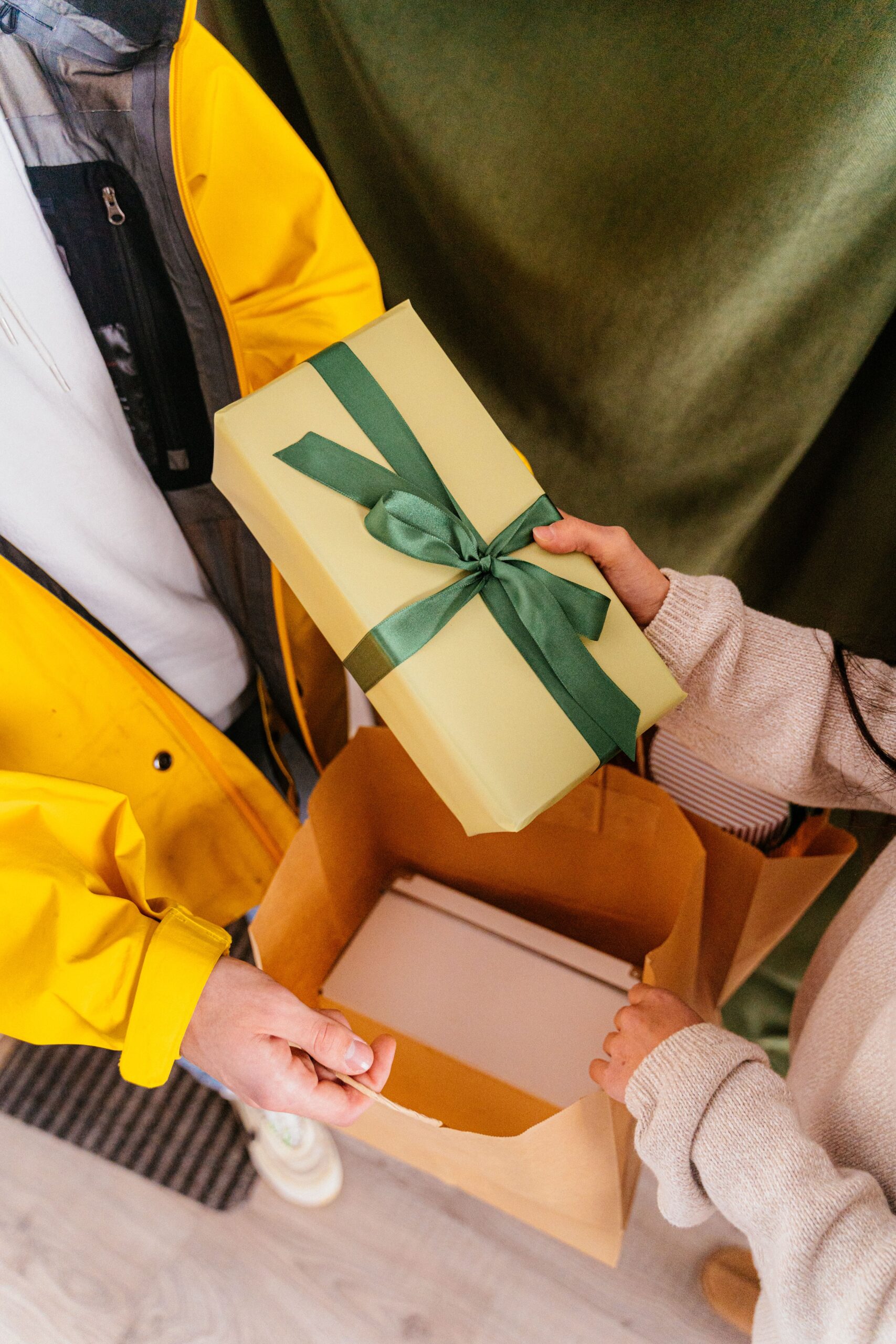
Present it with both hands, and don't be surprised if it isn't opened immediately in front of you (see below).
🎀 Presenting a Gift
- Use both hands to give and receive — the same convention that applies to business cards.
- Wrapping matters more than it might elsewhere — a nicely wrapped, modest gift is often better received than an unwrapped expensive one.
- Gifts are traditionally not opened immediately in front of the giver, to avoid any visible reaction (positive or negative) putting pressure on the moment. This is loosening in casual settings, but still common enough to be the safer default if you're unsure.
🔁 Okaeshi: The Return-Gift Custom
When someone gives you a gift of meaningful value — for a wedding, a birth, a hospital visit, or a significant favor — there's often an expectation of okaeshi (お返し), a return gift, typically given afterward, roughly half the value of what you received. This isn't universal for every small gesture, but it's worth knowing the concept exists so a "thank you" gift later doesn't catch you off guard, or so you know to budget for one yourself.
⚠️ 7 Things Worth Knowing
- Showing up to someone's home empty-handed — a small temiyage is the safer default, especially for a first visit.
- Opening a gift immediately in front of the giver — traditionally held until later; still the safer default when unsure.
- Skipping omiyage after a trip — bringing something back for coworkers is a common, low-key expectation in many workplaces.
- Overthinking the gift's value — the gesture and presentation matter more than an expensive price tag.
- Using one hand to give or receive — both hands is the respectful default.
- Not knowing okaeshi exists — a meaningful gift received may come with an unspoken expectation of a return gift later.
- Assuming wrapping doesn't matter — presentation is part of the gift, not an afterthought.
📋 Your Cheat-Sheet Recap
| Term | Japanese | What it means |
|---|---|---|
| Souvenir gift for a group (coworkers, family) | お土産 (omiyage) | Usually individually wrapped local snacks |
| Gift brought when visiting someone's home | 手土産 (temiyage) | A small gift for your host |
| Return gift custom | お返し (okaeshi) | A reciprocal gift, often ~half the value received |
| "This is a small gift, please accept it" | これ、つまらないものですが | Said with modesty, not literally about the gift's value |
Once you know the shape of it — bring something back, present it with both hands, don't expect it opened on the spot — omiyage stops being a source of anxiety and becomes one of the more genuinely warm parts of life here.