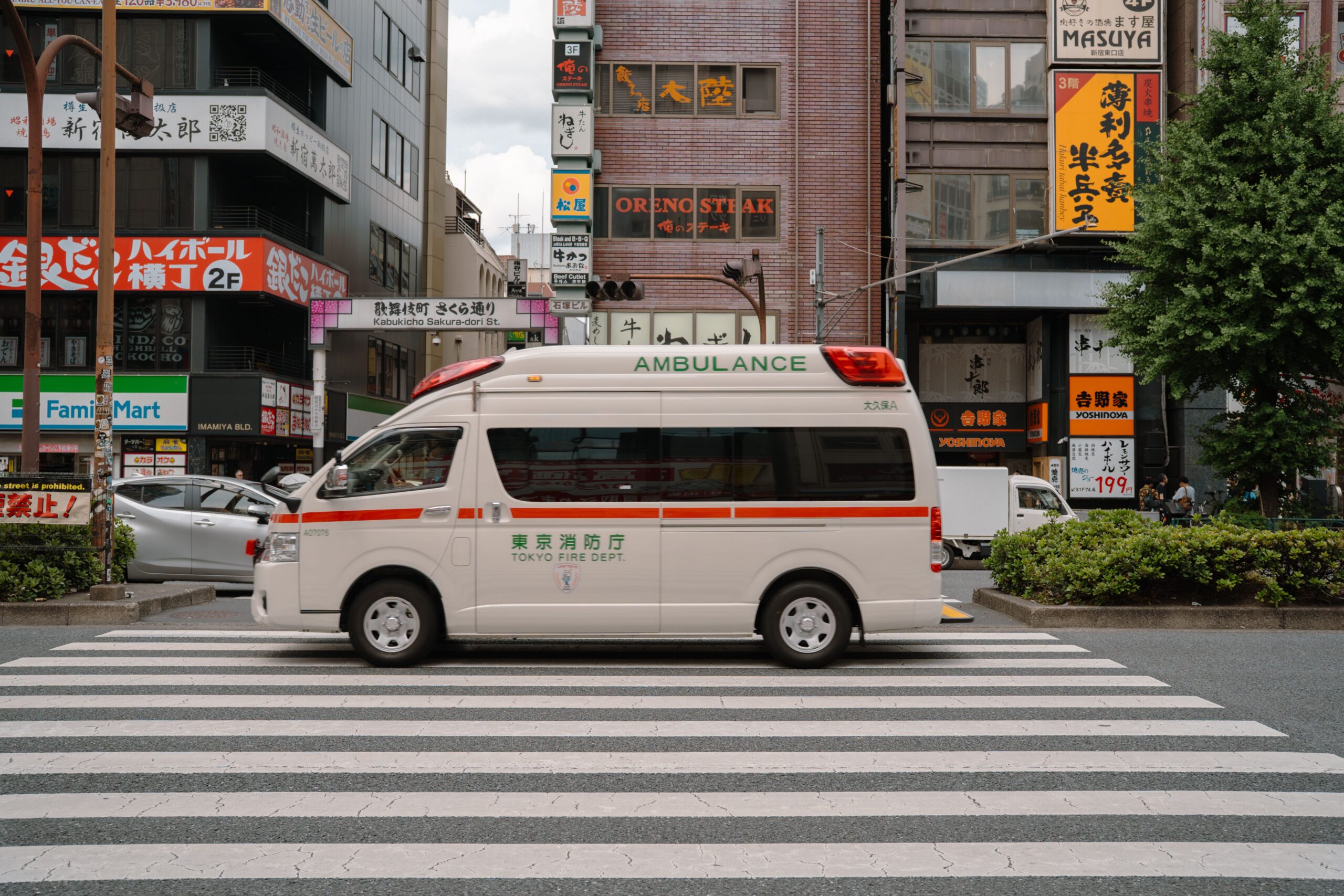
The one article in this series you hope you never need — but should bookmark anyway.
Most of this site is about making good moments in Japan go smoothly. This one is about the moments that aren't good — getting sick, getting hurt, or needing help fast — and not having to figure out the system for the first time while you're stressed.
🚨 Emergency Numbers: There's No Single "911" Here
| Situation | Number |
|---|---|
| Police | 110 |
| Fire or ambulance | 119 |
This trips up a lot of visitors from countries with one universal emergency number — in Japan, police and fire/ambulance are two separate numbers. Both are free to call, including from a phone without a Japanese SIM card.
Most major emergency lines now have access to multilingual interpretation support, so you don't need to be fluent — but these are the core phrases to get the call moving right away:
| English | Japanese | Romaji |
|---|---|---|
| Please send an ambulance | 救急車をお願いします | Kyūkyūsha o onegaishimasu |
| Please send a fire truck | 消防車をお願いします | Shōbōsha o onegaishimasu |
| I'm at ~ (location) | ~にいます | ~ ni imasu |
If you genuinely don't know your exact location, describing a nearby landmark, station name, or the name of the building you're in is usually enough to get help moving in the right direction.
💊 Pharmacy vs. Drugstore
Two different things, worth knowing apart:
- 薬局 (yakkyoku) — a pharmacy, typically attached to or near a clinic, where prescription medication is filled
- ドラッグストア (doraggu sutoa) — a drugstore, for over-the-counter medicine, basic first aid, and general health items — no prescription needed
| English | Japanese | Romaji |
|---|---|---|
| Do you have something for ~? | ~に効く薬はありますか? | ~ ni kiku kusuri wa arimasu ka? |
| Fever | 熱 | Netsu |
| Stomachache | 腹痛 | Fukutsū |
| Headache | 頭痛 | Zutsū |
| Cold | 風邪 | Kaze |
🏥 At a Clinic or Hospital
| English | Japanese | Romaji |
|---|---|---|
| I don't feel well | 具合が悪いです | Guai ga warui desu |
| It hurts here | ここが痛いです | Koko ga itai desu |
| I have insurance | 保険があります | Hoken ga arimasu |
| I don't have insurance | 保険がありません | Hoken ga arimasen |
| I have an allergy to ~ | ~のアレルギーがあります | ~ no arerugī ga arimasu |
If you have travel insurance, bring the policy details (a photo on your phone works) — staff may ask for it at registration. Larger hospitals in major cities increasingly have English-speaking staff or interpretation services; smaller clinics are less likely to, so having these phrases ready genuinely helps.
The Japan Medical Association maintains an official portal to help foreign patients find English-speaking care.
⚠️ 7 Things Worth Knowing Before You Need Them
- Police and ambulance are different numbers — 110 for police, 119 for fire/ambulance, not one combined line.
- Calling 119 covers both fire and ambulance — you'll specify which one you need when they answer.
- Pharmacies and drugstores aren't the same thing — a yakkyoku fills prescriptions; a doraggu sutoa sells over-the-counter items.
- Not carrying proof of travel insurance — a photo of your policy on your phone is enough, and clinics may ask for it.
- Assuming every clinic has English support — larger hospitals are more likely to; smaller clinics less so.
- Not knowing your address/location in Japanese — a nearby station name or landmark is a reliable fallback.
- Hesitating to call because your Japanese isn't perfect — multilingual interpretation support exists on major emergency lines; don't delay a call over this.
📋 Your Cheat-Sheet Recap
| # | English | Japanese | Romaji |
|---|---|---|---|
| 1 | Police | 110 | — |
| 2 | Fire / ambulance | 119 | — |
| 3 | Please send an ambulance | 救急車をお願いします | Kyūkyūsha o onegaishimasu |
| 4 | Please send a fire truck | 消防車をお願いします | Shōbōsha o onegaishimasu |
| 5 | I'm at ~ | ~にいます | ~ ni imasu |
| 6 | I don't feel well | 具合が悪いです | Guai ga warui desu |
| 7 | It hurts here | ここが痛いです | Koko ga itai desu |
| 8 | I have insurance | 保険があります | Hoken ga arimasu |
| 9 | I have an allergy to ~ | ~のアレルギーがあります | ~ no arerugī ga arimasu |
Hopefully you never need most of this. But if you do, having it ready in advance makes a stressful moment just a little bit easier.