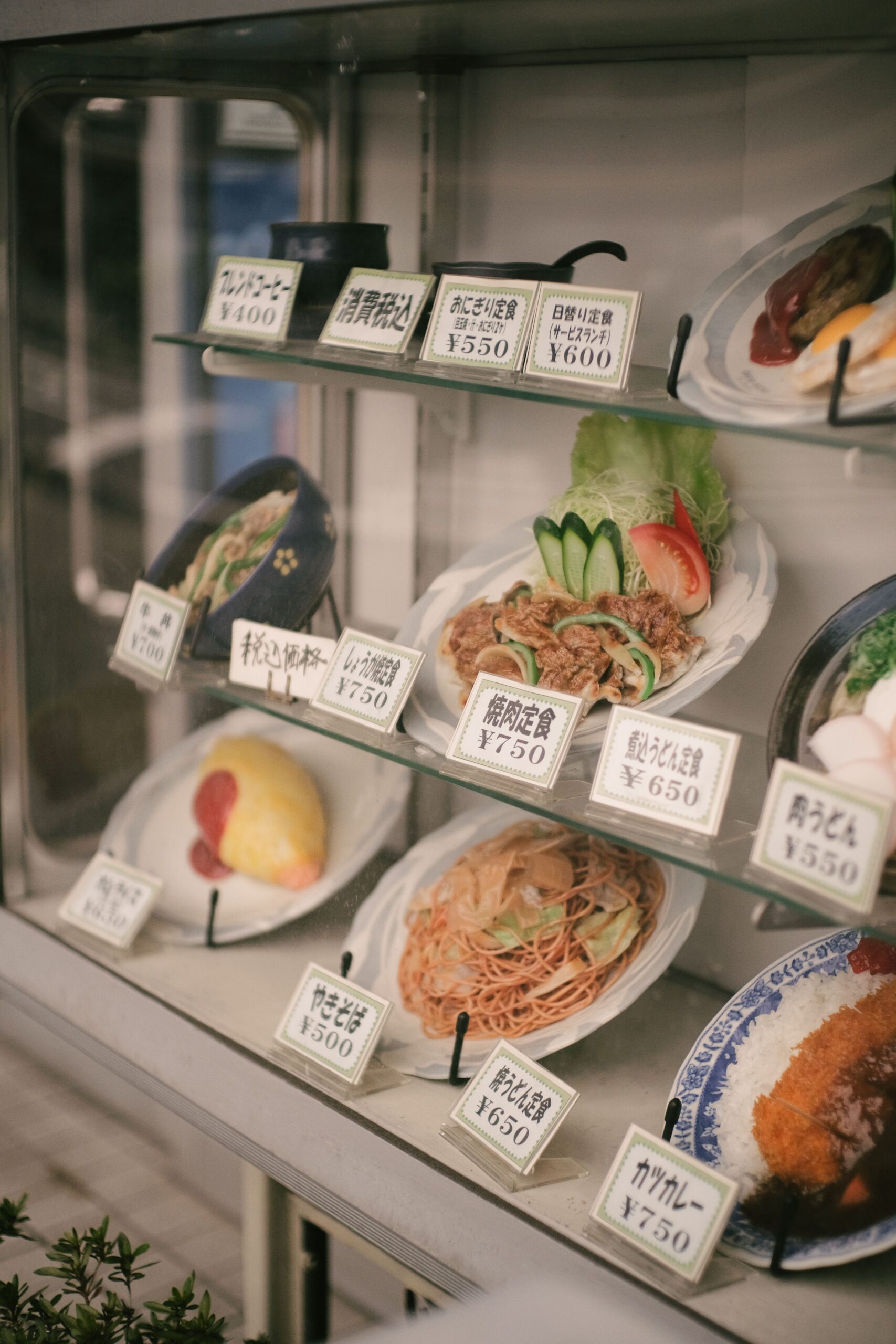
A Japanese menu looks like a wall of unfamiliar kanji — until you know the dozen or so words that show up on almost every single one.
You don't need to read fluently to order confidently. A small set of recurring menu categories covers most restaurants you'll walk into, from a train station soba stand to a sit-down izakaya.
📖 Menu Categories You'll See Constantly
| English | Japanese | Romaji |
|---|---|---|
| Set meal (main + rice + soup + sides) | 定食 | Teishoku |
| Today's special / recommendation | 本日のおすすめ | Honjitsu no osusume |
| Rice dishes | ご飯もの | Gohan mono |
| Noodle dishes | 麺類 | Menrui |
| Appetizers / small dishes | 前菜 / 一品料理 | Zensai / Ippin ryōri |
| Drinks | 飲み物 | Nomimono |
| Dessert | デザート | Dezāto |
Teishoku (定食) is worth specifically remembering — it's a full set meal built around one main dish, almost always the best value option, and extremely common at lunch.
🍜 Reading the Dish Itself
| English | Japanese | Romaji |
|---|---|---|
| Grilled | 焼き | Yaki |
| Fried | 揚げ | Age |
| Raw / sashimi-style | 生 / 刺身 | Nama / Sashimi |
| Set / combo | セット | Setto |
| Takeout | 持ち帰り / テイクアウト | Mochikaeri / Teikuauto |
| Eat-in | 店内 | Tennai |
Many dish names are compounds built from these pieces — 焼き鳥 (yakitori, grilled chicken skewers) and 唐揚げ (karaage, fried chicken) both use pieces from this table. Recognizing the building blocks helps you guess at dishes you've never seen written out before.
🥗 Dietary Needs
| English | Japanese | Romaji |
|---|---|---|
| I have an allergy to ~ | ~のアレルギーがあります | ~ no arerugī ga arimasu |
| I'm vegetarian | ベジタリアンです | Bejitarian desu |
| Without ~, please | ~抜きでお願いします | ~ nuki de onegaishimasu |
| Does this contain meat? | これは肉が入っていますか? | Kore wa niku ga haitte imasu ka? |
Vegetarian and vegan options can be genuinely limited outside bigger cities — dashi (fish-based stock) quietly shows up in a lot of dishes that otherwise look plant-based, so asking directly is worth the extra moment, especially for strict dietary needs.
⚠️ 7 Mistakes to Avoid
- Assuming an unfamiliar dish name means an unfamiliar flavor — many are built from the same handful of common word-pieces (yaki, age, nama).
- Overlooking the teishoku option — it's often the best value, especially at lunch.
- Not asking about dashi when ordering vegetarian — fish stock appears in many dishes that otherwise look meat-free.
- Assuming "vegetarian" is a well-understood concept everywhere — clarifying specifically what you avoid gets better results than the label alone.
- Skipping the photo menu — many restaurants have one; pointing is a completely normal way to order.
- Not asking for the day's special — "honjitsu no osusume" often gets you the freshest or best-value item.
- Assuming set-meal pricing includes everything you'd expect — drinks are often separate even within a teishoku; ask if unsure.
📋 Your Cheat-Sheet Recap
| # | English | Japanese | Romaji |
|---|---|---|---|
| 1 | Set meal | 定食 | Teishoku |
| 2 | Today's special | 本日のおすすめ | Honjitsu no osusume |
| 3 | Grilled / Fried / Raw | 焼き / 揚げ / 生 | Yaki / Age / Nama |
| 4 | I have an allergy to ~ | ~のアレルギーがあります | ~ no arerugī ga arimasu |
| 5 | I'm vegetarian | ベジタリアンです | Bejitarian desu |
| 6 | Without ~, please | ~抜きでお願いします | ~ nuki de onegaishimasu |
Once a few of these building blocks click, a Japanese menu stops being a wall of text and starts reading more like a short, repeating vocabulary list.