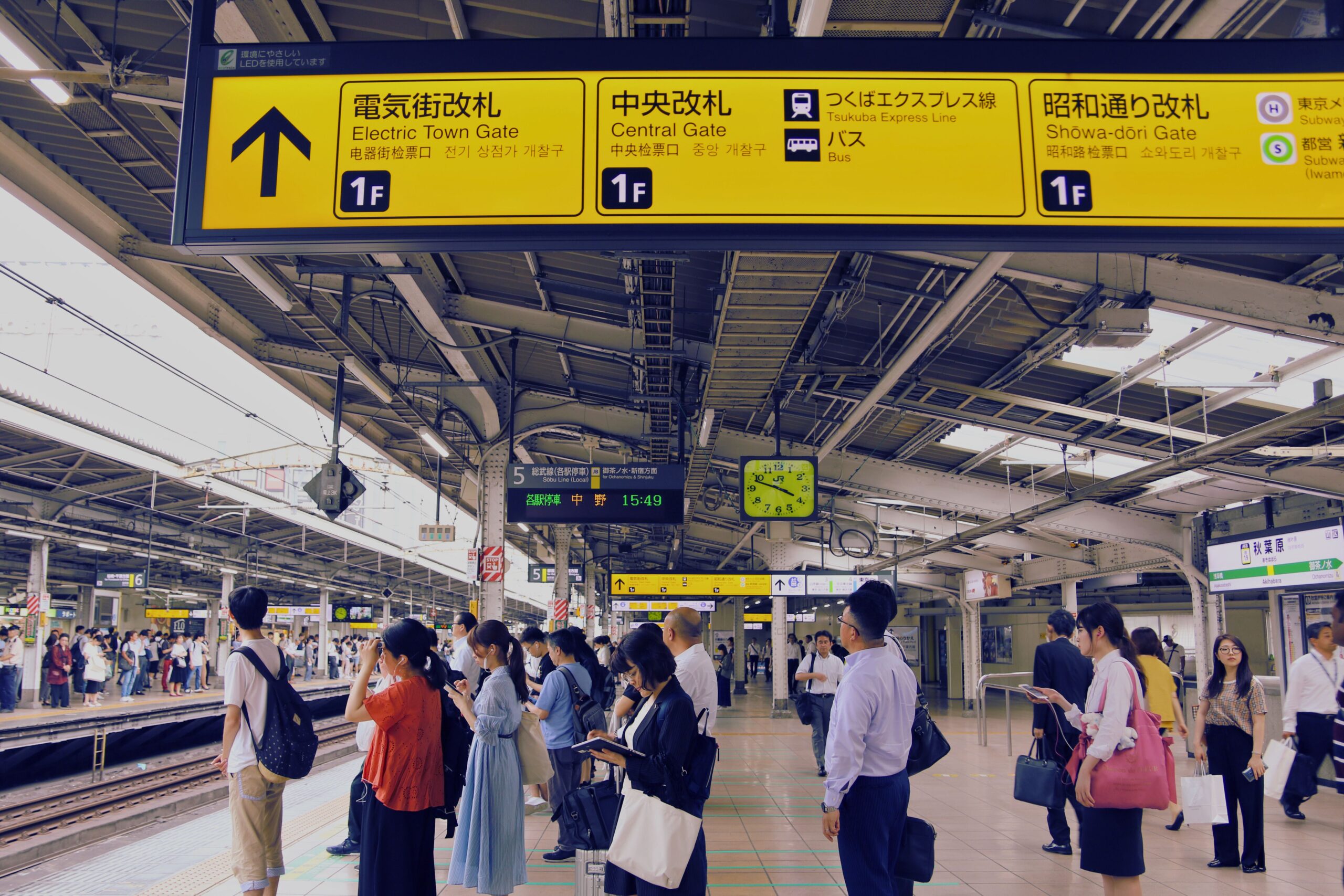
Nobody enforces these rules. People just... do them, consistently, everywhere.
Queueing in Japan isn't a sign posted on a wall — it's a shared social habit that shows up at train platforms, famous ramen shops, elevators, and convenience store registers alike. Once you know the pattern, you'll start seeing it everywhere, and fitting into it is easier than it looks.
🚶 Lines Form for Almost Everything
- Train platforms have painted lines marking exactly where doors will open — people queue there in advance, letting passengers exit before boarding (covered in more depth in our travel Japanese guide).
- Popular restaurants, especially well-known ramen shops, often have a visible line outside — joining the back of it, not asking to skip ahead, is the expected default even for a short wait.
- Registers and ATMs — a single line feeding multiple registers (rather than separate lines per register) is common in many stores, similar to how some airports queue for check-in.
- Elevators — people entering wait for everyone exiting first, and it's common to hold the door or press "open" for someone a few steps behind.
| English | Japanese | Romaji |
|---|---|---|
| Is this the back of the line? | これは列の最後ですか? | Kore wa retsu no saigo desu ka? |
| Excuse me, after you | お先にどうぞ | Osaki ni dōzo |
🪜 Escalators
Stand on one side, leave the other open for people walking — in Tokyo that's stand left, walk right; in Osaka it flips, stand right, walk left. When in doubt, watch what the people ahead of you are doing and match it.
🔇 Public Space, Generally
- Phones stay on silent in most shared, enclosed public spaces — trains, waiting rooms, quiet cafes.
- Voices stay relatively low in enclosed public areas; a volume that feels normal elsewhere can stand out here.
- Personal space in a line is usually closer than some visitors expect — standing a comfortable arm's length back can actually read as holding up the line rather than as polite distance.
⚠️ 7 Mistakes to Avoid
- Standing in the middle of an escalator — leave one side open for people walking past.
- Trying to board a train before passengers have exited — wait beside the doors, not directly in front, and let people off first.
- Assuming you can skip a short line "just this once" — joining the back is the consistent expectation, regardless of line length.
- Leaving extra space in a queue — standing further back than needed can read as not actually being in line.
- Not holding the elevator for someone close behind — a quick hand on the door or the "open" button is a small, appreciated gesture.
- Taking phone calls in quiet enclosed spaces — step outside or switch to text instead.
- Assuming queue norms are only about trains — the same pattern applies to restaurants, registers, and more.
📋 Your Cheat-Sheet Recap
| # | English | Japanese | Romaji |
|---|---|---|---|
| 1 | Is this the back of the line? | これは列の最後ですか? | Kore wa retsu no saigo desu ka? |
| 2 | After you | お先にどうぞ | Osaki ni dōzo |
None of this is written down anywhere you'll see as a visitor — it's learned entirely by watching. Match the pace and spacing of the people around you, and you'll blend in within your first few queues.