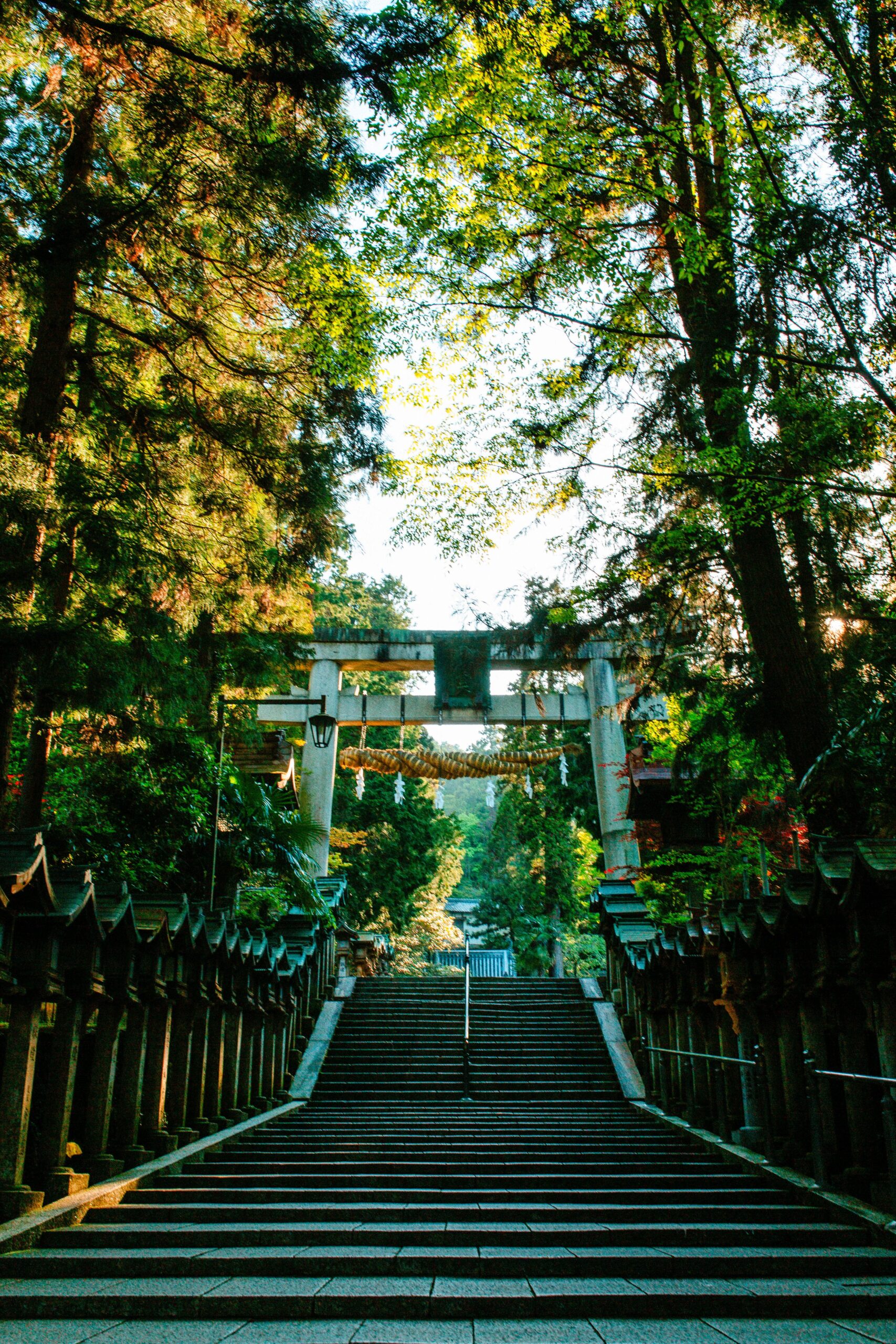
These places are still in active, everyday use — not museums. The etiquette matters.
A shrine or temple in Japan usually isn't a roped-off historical site — it's a place people visit on their way to work to pray for a good day, or bring their kids to for a blessing, or quietly grieve at, all while tourists are photographing the gate a few meters away. Most of the etiquette here isn't about strict religious rules for visitors; it's about not disrupting a place that's still genuinely in use.
Here's how to visit respectfully — and enjoy it more in the process, because the etiquette usually turns out to be the interesting part.
⛩️ Shrine or Temple? A Quick Way to Tell
| Shrine (Shinto) | Temple (Buddhist) | |
|---|---|---|
| Entrance gate | Torii (鳥居) — a simple, often red gate | A larger, often roofed gate (sanmon) |
| Typical name ending | ~jinja, ~jingu, ~taisha | ~ji, ~in, ~dera |
| Worship style | Bow, clap, pray | Quiet bow, hands together (no clapping) |
You'll see both, often within walking distance of each other, and the etiquette differs slightly between them — covered below.
🚶 Entering the Grounds
- Bow slightly before passing through the torii gate at a shrine — you're entering sacred ground, not just walking through an archway.
- Walk along the sides of the main path, not the center. The center is traditionally considered the path of the deity. This is one of the most consistently followed customs, even by locals who aren't otherwise religious.
- The same general respect applies at temple entrances, even without a formal "center path" rule.
💧 Using the Purification Fountain (Temizuya)
Near the entrance, you'll find a water basin with ladles — this is for purifying yourself before approaching the main hall.
- Take a ladle with your right hand, scoop water, and rinse your left hand
- Switch the ladle to your left hand, and rinse your right hand
- Switch back to your right hand, pour a little water into your cupped left palm, and rinse your mouth with it (don't drink directly from the ladle)
- Rinse your left hand once more
- Tilt the ladle upright so the remaining water runs down the handle, rinsing it for the next person
It looks more complicated written out than it actually feels once you're standing there — most people pick up the rhythm just by watching the person ahead of them.
🙏 How to Pray
At a shrine: the standard sequence is "ni-rei, ni-hakushu, ichi-rei" (二礼二拍手一礼) — two bows, two claps, one final bow. If there's a bell rope, you can ring it before this sequence to announce yourself. A small coin offering beforehand is customary; a 5-yen coin (五円, go-en) is considered particularly lucky, because it's a homophone for "good relationship" — but any coin is fine.
At a temple: there's no clapping. Simply bow quietly, bring your palms together in front of your chest (合掌, gasshō), and pray silently. If there's an incense burner, some visitors waft the smoke toward themselves before approaching — this isn't required, but it's a common and welcome gesture.
📸 Photos, Voices, and Everyday Respect
- Look for signs reading 撮影禁止 (satsuei kinshi) — "no photography" — common around inner altars, certain statues, and indoor halls. Follow them even if you see other visitors ignoring them.
- Keep your voice down, especially near people who are actively praying. Avoid photographing someone mid-prayer without asking.
- Avoid eating, drinking, or smoking while walking through the grounds — step to a designated rest area first.
- These are functioning religious sites, often with a working shrine or temple office to the side — that's not just a gift shop, even though it sells omamori and omikuji (below).
🎋 Omikuji & Omamori
Omikuji (おみくじ) are paper fortunes, usually available for a small fee. If you draw a bad fortune, the custom is to fold it and tie it to a designated rack or nearby pine branch, leaving the bad luck behind at the shrine rather than taking it home. A good fortune, on the other hand, is often kept.
Omamori (お守り) are protective amulets sold for specific purposes — safe travel, good health, exam success, and more. They're meant to stay sealed; opening one to look inside is considered to undo its purpose.
For more on respectful visits, JNTO's official guide covers the broader etiquette landscape.
⚠️ 7 Mistakes Visitors Make
- Walking straight down the center of the shrine approach path — stick to the sides.
- Clapping at a temple — that's a shrine custom only; temples get a quiet bow and gasshō.
- Drinking straight from the temizuya ladle — pour into your hand instead.
- Photographing marked no-photo areas — check for 撮影禁止 signs before shooting inside halls.
- Treating the grounds as a photo backdrop during someone's prayer — give people space and quiet.
- Opening an omamori "just to see" — it's meant to stay sealed.
- Keeping a bad omikuji fortune out of curiosity — tying it to the rack is the customary way to leave the luck behind.
📋 Your Cheat-Sheet Recap
| Term | Japanese | What it means |
|---|---|---|
| Torii | 鳥居 | The gate marking a shrine's entrance |
| Temizuya | 手水舎 | The purification water basin near the entrance |
| Two bows, two claps, one bow | 二礼二拍手一礼 | Standard shrine prayer sequence |
| Gasshō | 合掌 | Hands together in prayer (temple style) |
| No photography | 撮影禁止 | Sign marking areas where photos aren't allowed |
| Fortune slip | おみくじ | Paper fortune, tied up if the result is bad |
| Protective amulet | お守り | Stays sealed — never opened |
None of this is about performing a religion you don't practice — it's about visiting a place that matters to the people around you the same way you'd want your own sacred or meaningful places treated.